
What Silence Taught Me About Anxiety and Trusting God
Mar 04, 2026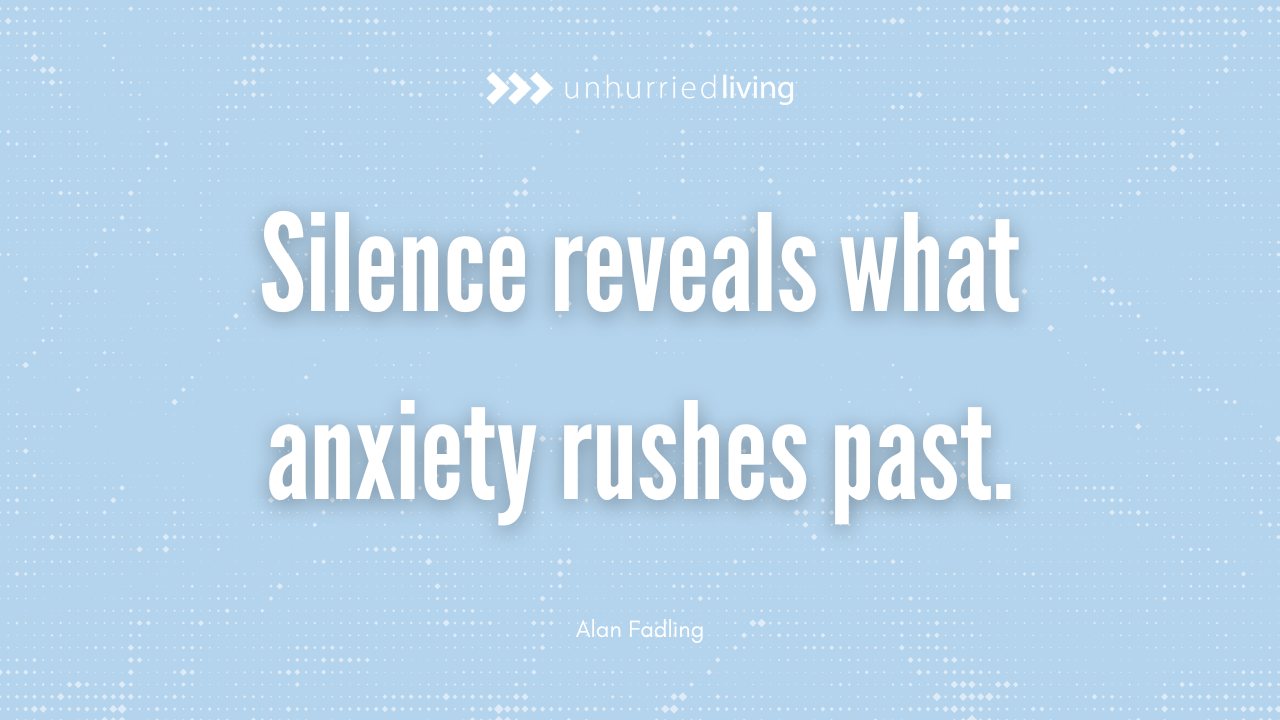
Blog by Alan Fadling
In the winter of 2018, I arrived at the Trappist monastery in Jarabacoa, Dominican Republic, in the middle of a very rainy week. The sun made a rare appearance that afternoon, spilling light into a small, grassy courtyard enclosed by stone walls. Two bougainvillea—one pink, one orange—climbed along the edge. A bird or two chirped in the distance. Far below, an occasional motorcycle made its way along the road, the sound rising faintly up the valley.
But what struck me most was not what I could see or hear. It was the quiet.
Not an empty quiet. Not an awkward silence. This was a prayerful quiet. A quiet that felt like home. A quiet in which God was present and honored. A quiet bathed in love. I felt it almost immediately, and I was grateful.
The quiet extended even into the dining room. I shared my first meal with a doctor and his wife. They spoke no English. I spoke very little Spanish, or at least very little that I trusted. So we ate mostly in silence. And somehow that silence felt fitting. Unforced. Hospitable. It did not demand anything of me. It simply received me.
Later, resting in my room, I began to notice something else that had traveled with me all the way to this peaceful place: anxiety.
It arrived quietly too.
I noticed it first in small assumptions. I saw old European-style electrical outlets in my room and in the dining hall and concluded, without much investigation, that I would not be able to charge my computer. I resigned myself to inconvenience and wrote by hand that first day. Only later did I notice grounded outlets nearby. One in the dining room. One in the hallway. One tucked above my closet, right there in my room. What my anxiety had assumed to be a problem simply wasn’t.
Another evening, after a late speaking engagement and dinner, we returned to the monastery to find the front door bolted shut. My mind rushed ahead of reality. I assumed I would need to find somewhere else to sleep. I hate inconveniencing people, so my instinct was to inconvenience myself instead. But help was close at hand. A guest called out. The door was opened. The crisis dissolved almost as quickly as it had formed.
Then there was the incident with my wallet.
As we stepped out of the car to go to dinner, I felt for it in my back pocket. It wasn’t there. My heart rate quickened. I checked my bag. Nothing. Phone calls were made. People searched. I carried my worry with me through the entire meal. By the time we returned, I was certain it was gone.
Of course, it wasn’t.
I had set it down earlier when I changed clothes. It had slipped under a zipper flap on my bag, hidden in plain sight. Anxiety had confidently narrated a story that reality did not support.
What struck me afterward was not just that I had been wrong. It was how quickly anxiety had given up on the truth. How readily it rushed to conclusions. How eager it was to decide what was real before reality had finished speaking.
In the prayerful quiet of the monastery, this habit became easier to see. Anxiety tends to assume it knows more than it does. It fills in gaps with fear. It presses me to act, to brace, to prepare for loss that has not yet occurred and may never occur at all.
I’ve spent years reflecting on this pattern—both in my own life and in the lives of leaders I walk with. Much of what eventually became my book A Non-Anxious Life grew out of moments like these when I noticed how often anxiety speaks with confidence but without wisdom. Writing that book did not cure me of anxious habits. It helped me name them. And naming them, I’m learning, is often the first small step toward freedom.
The quiet did not scold me for this. It simply revealed it.
And perhaps that is one of the gifts of silence. It slows the story we are telling ourselves long enough for a truer story to emerge. In that slower space, anxiety loses some of its urgency. And we are invited, again, to wait, to notice, and to trust that reality, like God, is often kinder than our fears predict.
For Reflection:
- Where have you noticed anxiety rushing ahead of reality lately, filling in the gaps before the truth has had time to speak?
- What small assumptions do you tend to make when you feel tired, uncertain, or out of control—and how might quiet help you notice them more kindly?
- Is there a place in your life right now where you are being invited to wait a little longer, to gather a bit more information, or to trust that help may be closer than you think?

