
When Peace Guides Our Leadership
Jun 24, 2026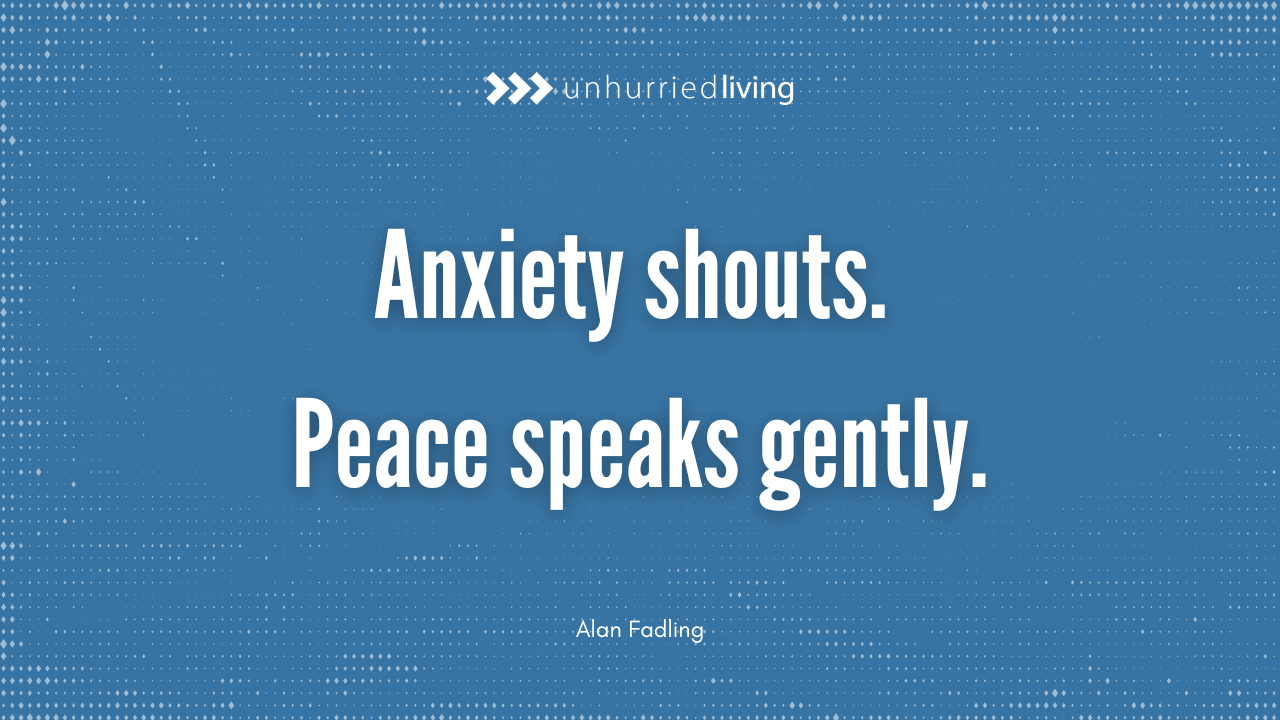
Blog by Alan Fadling
Most of us can recognize when anxiety has been shaping our leadership. The question that arises from that realization is quieter but just as important: What does it look like to begin living from a different center? It often begins here: When leaders come to trust that God is not angry with them, something softens. Trust grows. And peace follows—not as something we manufacture but as something we receive.
The year A Non-Anxious Life was published, I had dinner with a friend who is both a thoughtful author and a seasoned professional counselor—someone who spends his days helping people navigate anxiety with real wisdom and care. When we sat down, he placed his copy of the book on the table between us. He showed me that nearly every page was highlighted or written on, filled with his own reflections. At one point he said very simply, “This has been my favorite book I’ve read this year.”
What stayed with me wasn’t the comment itself but the way he had worked with the book. It reminded me that this way of life isn’t just for people who feel anxious; it also serves those who walk alongside others, helping them discover a steadier, more peaceful way to live and lead.
That peace becomes especially precious at night. Many leaders know what it is to lie awake replaying conversations, rehearsing responsibilities, and bracing for imagined futures. Anxiety loves the dark. But rest itself is an act of trust. When we sleep, we relinquish control and confess our limits. That can feel surprisingly vulnerable for leaders, and yet learning to rest—really rest—is part of becoming a non-anxious presence.
Over time, I’ve come to see anxiety not only as something to manage but as a signal—a dashboard light of the soul. It alerts us to places where trust is strained, where we’re carrying more than our share, where our vision of God has become constricted. Instead of shaming ourselves for anxiety, we can grow curious. What is this anxiety trying to protect? What does it fear losing? What might it mean to entrust this concern to God rather than grapple with it alone?
When leaders do this inner work, the effects ripple outward. Peace is never merely personal. A grounded leader steadies an organization. A regulated presence calms anxious spaces. A leader who abides quietly invites others to breathe. This is why peace is not just a private virtue; it is a public good.
Communities do not become peaceful because everyone agrees. They become peaceful because enough people are oriented toward the same center. When leaders tune their hearts to God’s heart, harmony becomes possible—even amid difference. This is slow work and it is work well worth doing.
If you haven’t yet read A Non-Anxious Life, I invite you to do so. And if you have, perhaps this is an invitation to return. Not to read it mainly as a solution to anxiety but as a companion within it—a guide for cultivating an inner life capable of bearing the weight of leadership with grace, courage, and peace. Not simply to revisit the words, but to reenter the way of life they point toward—the kind of life worth underlining, lingering over, and living into.
Because the world will continue to bring trouble. That much is certain. But peace—deep, durable, Christ-shaped peace—is still available. Not beyond the chaos but within it. And leaders who learn to live from that peace become quiet signs of hope in anxious times.
Closing Reflections and Experiments
Let me offer a few gentle invitations—not as tasks to complete but as experiments to try. Choose one. You might return to the others over time.
First, notice your anxiety without letting it lead. When urgency or worry rises, try simply naming it. Say to yourself, “Anxiety is present.” You don’t need to argue with it or push it away. Imagine inviting it to take a seat in the back—present but not in charge. What changes when you respond this way?
Second, listen for the voice you’re trusting most. In anxious moments, which voice grows loudest in you? Is it fear, obligation, or self-criticism? Gently ask God to let his voice become clearer: steady, patient, compassionate. What might it sound like for God to speak peace rather than pressure into your inner life?
Third, reflect on how you imagine God toward you. Do you tend to assume God is disappointed or quietly irritated? What would it be like to sit with this word from scripture: “I am not angry with you” (Isa. 27:4-5). Let that sink in, and notice what settles in you.
Finally, try one small experiment in leading from peace this week. Slow your pace in one meeting. Pause before reacting to tension. Entrust one outcome to God rather than carrying it alone. How might your leadership feel different if peace—not anxiety—set the tone?
These are not fixes. They are practices. And over time, practiced peace becomes a way of life—one that blesses not only your own soul but the people you’re called to serve.
For Reflection:
- You might take a moment to return to the invitations in the final section above and notice which one feels especially fitting for you right now. There’s no need to take on all of them—just begin where you are and let that be enough.

