
Why Unhurried Leadership Takes Time to Bear Fruit
Jun 01, 2026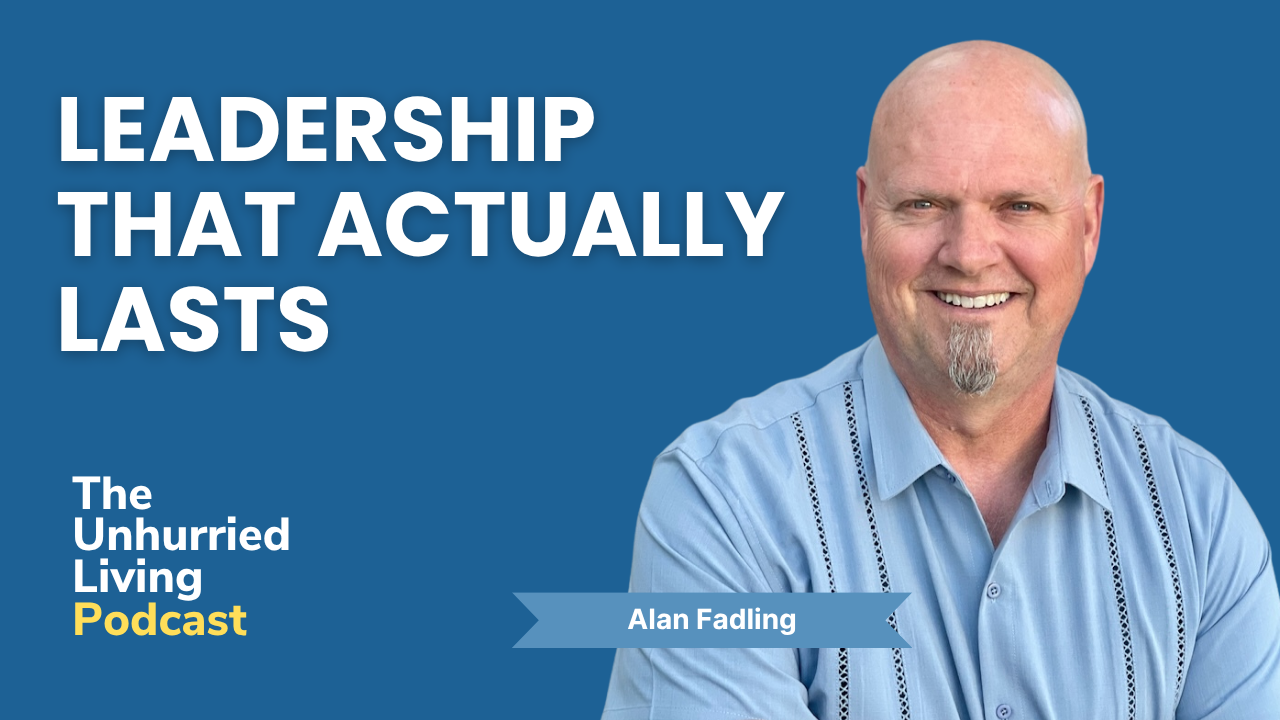
Blog by the Unhurried Living Team
Most leaders are not failing for lack of effort. They are working at a pace that quietly undermines the very things they care about most. Unhurried leadership is not a slower version of the same hustle; it is a different orientation entirely, one that tends rather than drives, and cultivates rather than extracts. In this episode of the Unhurried Living podcast, Alan Fadling draws on the wisdom of Kentucky farmer and poet Wendell Barry to explore what sustainable leadership actually requires, and why the most important growth in any organization simply cannot be rushed.
What Does It Mean to Lead from Abundance Rather Than from Scarcity?
Most leaders Alan Fadling knows are trying to do good work. The problem is not their intentions; it is their pace. When leaders operate from scarcity, they push for results before the ground is ready, demand growth before trust is established, and move so quickly that they miss what is actually happening in the people around them. Leading from abundance rather than from scarcity begins with a different question: not "What can I extract from this team today?" but "What does this team need in order to genuinely flourish?"
Alan grounds this in a passage from Wendell Barry's book Standing by Words, in which Barry describes seventeen years of restoring a once-exhausted hillside. The hillside eventually provided abundant pasture, but only after seventeen years of patient, consistent tending. Barry's observation is pointed: "If I had been a millionaire or if my family had been starving, it would still have taken 17 years." Money and urgency could not compress the timeline. Nature was simply not in a hurry.
Alan has spent decades observing leaders who are spiritually depleted, and the pattern is consistent. Leaders who lead from scarcity are always behind, always reactive, always managing the gap between what they hoped would happen and what actually did. Leading from abundance rather than from scarcity looks different. It begins in the hidden life (in prayer, in honest reflection, in returning regularly to the source of your strength). Over time, the quality of that inner life becomes the quality of what you offer everyone else.
The actionable practice here is small and concrete: before your next full week begins, identify the one place you draw from most deeply, and protect time for it. Not because it is productive, but because it is the ground your leadership grows from.
If you are looking for a community that takes the inner life of leadership seriously, explore it here. Unhurried Living offers coaching, spiritual direction, and formation resources for leaders ready to lead differently.
Why Giving Attention Before Giving Direction Changes Everything
The second quiet movement Alan Fadling names is the one most countercultural for leaders trained in productivity: give your attention before you give your direction. In meetings and conversations, the reflex is to move quickly to answers (to manage, to fix, to direct). But as Alan observes, people rarely flourish because they are managed well. They flourish because they are known.
Giving attention before giving direction as a leader is not a technique. It is a posture rooted in a conviction that the clarity we are trying to provide most often emerges as we slow down enough to truly hear. Ask one more question. Listen a little longer. Resist the reflex to speak into the silence. The wisdom in the room frequently surfaces when a leader is willing to wait for it, rather than filling the space with answers.
This is not passivity. Giving attention before giving direction as a leader requires far more internal steadiness than simply having the next answer ready. It means tolerating the discomfort of not knowing yet, and trusting that the process of genuine listening is itself a form of leadership. Barry's framing offers a useful translation: a farmer does not tell the soil what to do. A farmer pays attention to what the soil is already doing, and responds to that.
Alan's invitation here is to try it in the next conversation that matters. Rather than entering with your conclusion already formed, ask one question you do not already know the answer to, and stay with what comes. Giving attention before giving direction as a leader is a practice, not a personality type, and it is available to anyone willing to slow down enough to try.
When you are ready to go deeper into the practices that sustain this kind of leadership, find it here. The Unhurried Living blog and resources offer ongoing reflection for leaders who want to lead well over the long haul.
What Happens When Leaders Stay Long Enough to Learn?
The third movement Alan names may be the most undervalued: stay long enough to learn from what you have done. After a decision is made, after a season concludes, after a project finishes, the easy move is to move on. The inbox is full. The next initiative is waiting. The pressure to keep moving is constant. But staying long enough to learn from leadership decisions is what turns experience into wisdom, rather than just accumulating more experience.
Alan describes this as turning leadership into an apprenticeship. Circle back to the outcomes of your decisions. Notice what they produced in people, in the culture, in your own soul. Let what happened teach you what you could not have learned beforehand. This is not rumination or second-guessing; it is the kind of reflective attentiveness that sustainable leadership requires. Without it, leaders keep repeating patterns they never paused long enough to examine.
Barry's image of the hillside carries this forward in a compelling way. The scars on that land were "healed over, though still visible." The history of the ground was not erased; it was metabolized. The hillside was better for having been tended over time, not in spite of its difficult past, but because someone stayed long enough to work with it, season after season. Staying long enough to learn from leadership decisions asks the same of us: don't just move through your seasons. Learn from them.
The quiet practice Alan offers is simple: after your next significant decision or initiative, build in a brief moment to circle back. Ask what you are noticing in the people around you. Ask what the outcome is revealing about your approach. Staying long enough to learn from leadership decisions is not a post-mortem; it is an ongoing attentiveness that shapes who you are becoming as a leader.
How Does Unhurried Leadership Compare to the Way Most Leaders Are Trained to Work?
|
The Conventional Leadership Posture |
The Unhurried Leadership Posture |
|
Drive results; push for growth |
Tend the conditions; cultivate growth |
|
Move quickly to answers |
Give attention before giving direction |
|
Measure by metrics and dashboards |
Notice deeper vitality over time |
|
Lead from urgency and scarcity |
Lead from abundance and rootedness |
|
Finish and move on |
Stay long enough to learn |
A Word for Leaders Who Are Already Tired
Alan Fadling speaks to burned-out leaders with an honesty that comes from having lived this himself. The greatest resource any leader brings to their work is not their strategy or their output; it is the quality of God's work in them, the quality of their own inner life. The thesis of unhurried leadership is not that you should accomplish less. It is that the kind of things worth building (trust, depth, resilience, a genuinely life-giving culture) cannot be rushed, no matter how much effort or urgency or resources you apply to them.
Sustainable leadership is not a better productivity system. It is a different way of being in the work. It is the long, patient, attentive practice of a farmer who knows the soil takes time, who reads the ground rather than imposing on it, and who has learned to trust that real growth comes in season. That kind of leadership is available to you, not by working harder, but by tending more faithfully.
Sign up for the Weekly Email to receive ongoing reflection on unhurried leadership and soul care, sent to leaders who are learning to lead from a deeper place. Sign up here. If you want a longer on-ramp, the Unhurried Daily Email is a 40-day devotional sequence designed to help you slow down and re-root. Get started here.
Frequently Asked Questions
Q: Why does good leadership take so long? A: Good leadership takes time because the things most worth cultivating (trust, depth, resilience, a genuinely life-giving culture) grow at their own pace and cannot be forced. As Wendell Barry observed about restoring exhausted farmland, no amount of money or urgency could compress a seventeen-year process. The same is true in organizations: sustainable growth requires patient, consistent tending, not accelerated pressure.
Q: How can I slow down as a leader? A: Slowing down as a leader begins not with your calendar but with your inner life. Alan Fadling suggests three starting points: return regularly to the source you draw from (for many leaders, that is prayer and honest presence with God); give your attention before your direction in every significant conversation; and stay long enough after decisions to learn what they are producing in the people around you. None of these require dramatic changes; they require a different quality of attention.
Q: What does unhurried leadership look like? A: Unhurried leadership looks less like a slower pace and more like a different orientation. It means leading from abundance rather than scarcity, tending the conditions for growth rather than driving outcomes, and valuing what is hidden and long-forming over what is immediately measurable. In practice, it often shows up as a leader who asks more questions than they answer, who notices the culture they are cultivating, and who has enough inner reserve to remain steady when pressure rises.
Q: Can this approach work in high-pressure leadership environments? A: Alan Fadling is not writing for leaders who have the luxury of a slow pace; he is writing for leaders in the middle of real pressure, real responsibility, and real urgency. The argument of unhurried leadership is not that pressure disappears, but that a leader rooted in a deep inner life is better equipped to absorb strain without fragmenting. The unhurried posture is not withdrawal from the demands of leadership; it is a way of meeting them from a fuller place.
Q: What is the difference between tending and driving in leadership? A: Driving leadership treats an organization like a machine: apply more input, get more output. Tending leadership treats an organization more like a farm; read the conditions, cultivate what is already alive, remove what is blocking growth, and trust that real vitality comes from life within rather than force applied from without. The farmer does not make crops grow; the farmer creates and maintains the conditions in which growth becomes possible. Tending asks leaders to pay that same quality of attention to the people and culture in their care.

