
When Good Intentions Get Ahead of God
Oct 28, 2026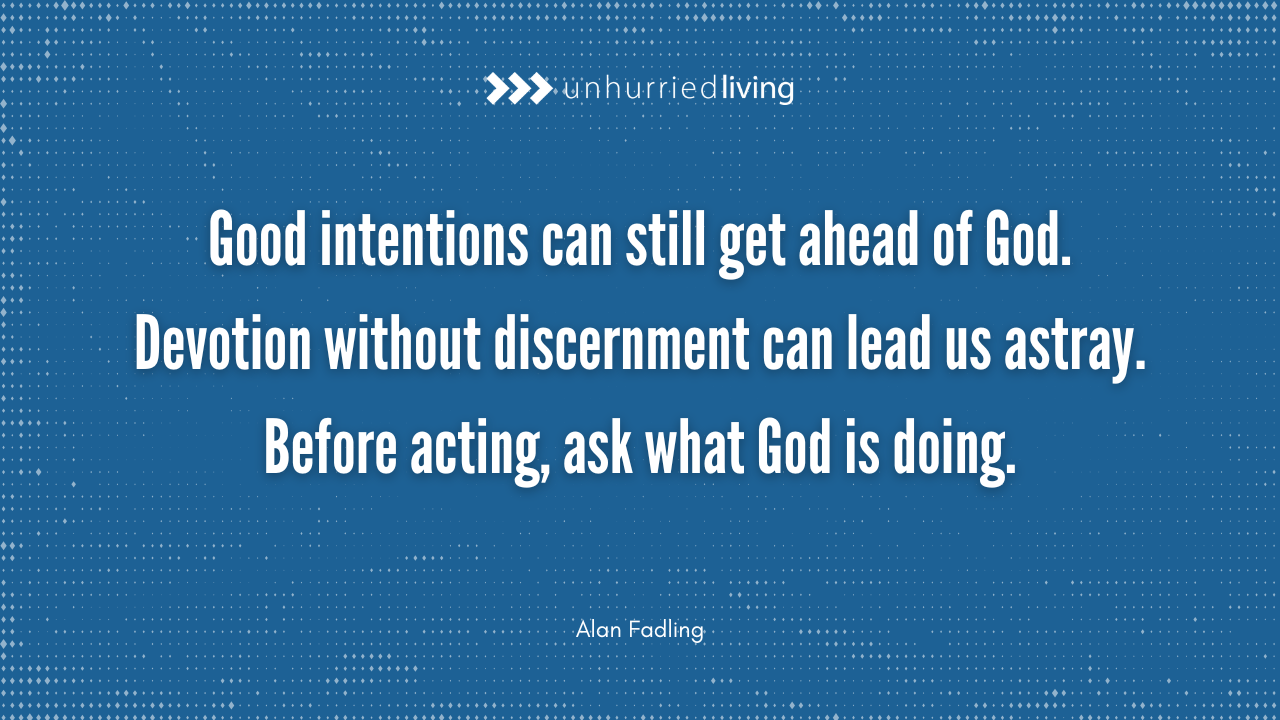
Blog by Alan Fadling
Paul describes our work in God’s kingdom as planting and watering while God gives the growth. That way of seeing our work invites an important question that goes deeper than why we do what we do to ask, Is what we are doing actually what God is asking of us? Leaders can be deeply sincere, full of devotion, and eager to do something meaningful for God. Yet, even good intentions can move us ahead of God rather than with him. There is a fascinating moment in the life of King David that speaks directly to this possibility.
Misguided Good Intentions: David and Nathan
I recently participated in a leadership conference where one of the speakers used a familiar illustration about the difference between contribution and commitment. He said a chicken contributes to breakfast by laying an egg; a pig commits by providing the bacon. His point, of course, is that leaders should be more like the pig than the chicken—fully committed to the cause.
I understand the spirit of that illustration. Christian leadership does call for real devotion. The work entrusted to us matters, and halfhearted engagement rarely bears much fruit.
But when the pig makes his contribution to breakfast, he’s done. He’s out. There are no more breakfasts for him to contribute to. In that sense, the pig becomes a rather vivid illustration of the kind of leader who burns out and doesn’t last. That leader is also out.
This made me wonder whether sometimes we encourage a kind of intensity in Christian leadership that focuses more on how much we give and less on whether we are giving ourselves to what God is actually asking of us.
That reflection brought to mind a fascinating moment in the life of King David from 2 Samuel 7.
David had finally come to a season of rest. His enemies had been subdued, and he was settled in his palace. One day he looked around and said to Nathan the prophet, “Here I am, living in a house of cedar, while the ark of God remains in a tent.”
It sounded like a noble impulse. David wanted to build God a temple—a house fitting for the Lord.
Nathan’s response seemed perfectly reasonable. He told the king, “Whatever you have in mind, go ahead and do it, for the Lord is with you.”
In other words, “David, you’ve been successful. God has clearly been with you. Follow the good impulse that’s on your heart.”
But that night the word of the Lord came to Nathan with a surprising correction: “Go and tell my servant David, ‘This is what the Lord says: Are you the one to build me a house to dwell in?’”
In other words, David’s idea was sincere. It was generous. It sounded like a wonderful act of devotion.
But it wasn’t what God was asking David to do.
David assumed that because something seemed good—and because his intentions were honorable—it must also be God’s will. Nathan initially made the same assumption. But God gently interrupted that conclusion.
And that moment raises a searching question for those of us who lead in Jesus’s name. Of course we want to be devoted to the work we are doing. But we also need to ask:
Is the work we are doing actually what God is inviting us to do?
Sometimes Christian leadership encourages an almost frantic determination to do great things for God. Passion and devotion matter. I know I often need more of that kind of energy myself. But devotion alone is not the whole story. Even sincere devotion can move us toward doing something for God that God never asked of us. The deeper question is whether we are listening closely enough to discern what God actually wants.
One of the greatest transformations in a leader’s life is learning to not simply ask, “What great thing can I do for God?” but to ask “Lord, what would you like me to do?”
Or perhaps even more humbly, “Is there something I am eager to do for you that you are not asking of me?”
Moments like that invite a deeper shift in how we think about leadership in the kingdom of God. Perhaps our role is not primarily to accomplish impressive things for God but to learn how to participate more attentively in what God is already doing. That kind of leadership begins not with intensity but with receptivity—with prayer that teaches us how to listen before we act.
We Don’t Build God’s Kingdom with Human Effort
The theologian Hans Urs von Balthasar describes this shift beautifully in his book simply titled Prayer:
“We do not build the kingdom of God on earth by our own efforts (however assisted by grace); the most we can do, through genuine prayer, is to make as much room as possible, in ourselves and in the world, for the kingdom of God, so that its energies can go to work.”*
None of us builds the kingdom of God through our own efforts—not even with a little divine assistance added in. At our best, we learn something much humbler and more freeing: We learn to become people through whom God can do what God wishes to do.
We make room for the kingdom of God to reign in us so that it might begin to reign through us.
Our leadership grows out of a living and interactive relationship with God. We share what God gives us in contemplation. We speak what we hear in prayer. We act in response to what the reality of God-with-us is already doing around us.
In that sense, the work of leadership is not simply about building something impressive for God. It is about learning how to join God in the work he is already doing.
And perhaps that is one of the deepest conversions in a leader’s life.
We might begin by asking, “What can I accomplish for God?”
But over time we learn to ask a humbler, wiser question: “Lord, what are you doing—and how may I join you?”
That kind of leadership grows out of prayer. It grows out of listening. It grows out of a life that is slowly being shaped by the presence of Jesus.
And when that happens, our work—whatever form it takes—becomes one small way we join him in praying and living these familiar words:
Your kingdom come. Your will be done.
For Reflection:
- Where might you be giving yourself wholeheartedly to something good without having recently asked whether God is still inviting you into it?
- What might change if, before asking what you can accomplish for God, you asked, “Lord, what are you doing, and how may I join you?”
(Purchases made via the links may provide an Amazon Affiliate commission fee to Unhurried Living. This adds nothing to the cost of your purchase).
*Hans Urs von Balthasar, Prayer, trans. Graham Harrison (Ignatius Press, 1986), p. 105.
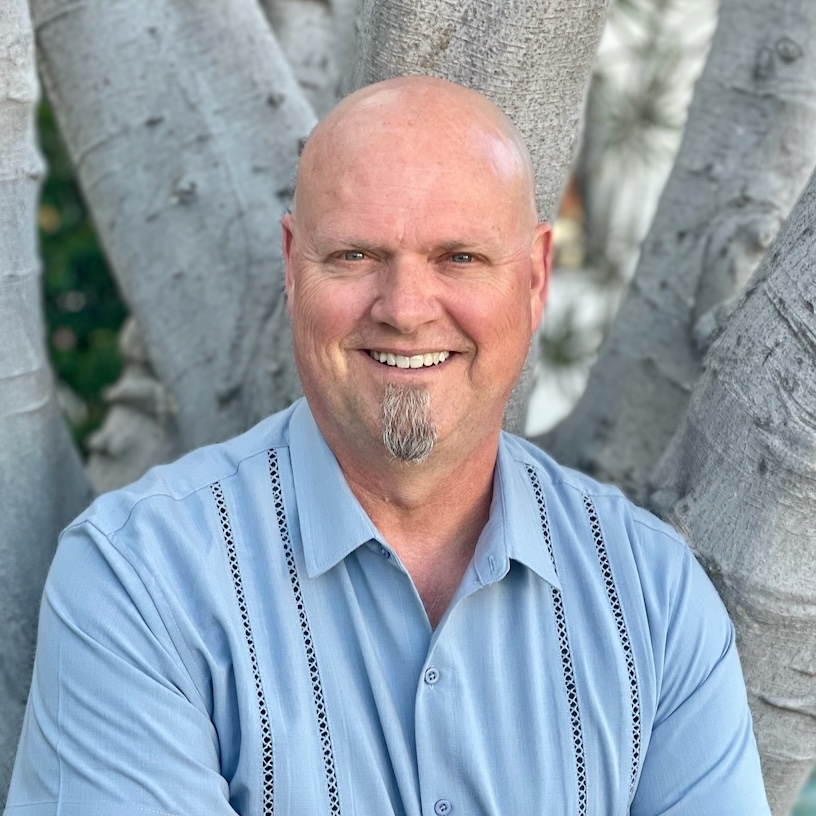
Alan Fadling (MDiv) is a founding partner of Unhurried Living, Inc. in Mission Viejo, CA. He writes and speaks as an expert in the challenge of hurry in contemporary life and work and how to overcome it. He consults and coaches leaders and their organizations in the U.S. and around the world, helping them work towards long-term productivity that lasts rather than settling for quick fixes that don’t. Alan co-leads PACE, a two-year leadership formation journey that helps leaders live and lead from spiritual depth rather than depletion. He is the award-winning author of six books including An Unhurried Life, An Unhurried Leader and A Non-Anxious Life. To connect with Alan and find resources for soul care and leadership, visit unhurriedliving.com or find him on LinkedIn.

